



How is the grinding wheel wear of a rail grinding machine detected?
Jan 13, 2026
Leave a message
Grinding wheels are essential components of rail grinding machines, which play a crucial role in maintaining the quality and safety of railway tracks. Over time, these grinding wheels experience wear, which can significantly impact the performance of the rail grinding machine. As a reputable rail grinding machine supplier, we understand the importance of accurately detecting grinding wheel wear. In this blog, we will explore various methods employed to detect grinding wheel wear in rail grinding machines.
Understanding the Importance of Grinding Wheel Wear Detection
Before delving into the detection methods, it is essential to grasp why detecting grinding wheel wear is so vital. The condition of the grinding wheel directly influences the quality of rail grinding. A worn - out grinding wheel may not be able to achieve the desired surface finish on the rail, leading to uneven wear on the rail itself. This can affect the running stability of trains, increase noise levels, and even pose safety risks. Moreover, continued use of a worn grinding wheel can cause excessive stress on the rail grinding machine, potentially leading to mechanical failures and costly repairs.
Visual Inspection
One of the simplest and most traditional methods of detecting grinding wheel wear is visual inspection. This method involves a trained operator visually examining the grinding wheel during breaks in the grinding process or at regular intervals. The operator looks for signs such as changes in the shape of the grinding wheel, cracks, or loss of abrasive grains.
If the grinding wheel has a significant amount of wear, it may lose its original round shape and become uneven. Cracks can occur due to the high stress and heat generated during the grinding process, and loose or missing abrasive grains can indicate that the wheel is nearing the end of its useful life. Visual inspection, however, has its limitations. It is a subjective method, and it may not be able to detect early - stage wear that is not visible to the naked eye.
Dimensional Measurement
Another approach to detecting grinding wheel wear is through dimensional measurement. This method involves using measuring tools such as calipers, micrometers, or gauges to measure the key dimensions of the grinding wheel, such as its diameter, thickness, and width. As the grinding wheel wears, these dimensions will change.
For example, as the abrasive grains on the surface of the grinding wheel are gradually worn away, the diameter of the wheel will decrease. By regularly measuring the diameter of the grinding wheel and comparing it with the initial value, operators can determine the degree of wear. Thickness and width measurements can also provide insights into the internal and peripheral wear of the wheel. Some advanced rail grinding machines are equipped with automated dimensional measurement systems, which can provide more accurate and consistent measurements. This is a more objective method compared to visual inspection, but it still requires regular measurement activities, and it may not be able to capture dynamic wear during the grinding process.
Power Consumption Monitoring
Power consumption monitoring is an effective way to detect grinding wheel wear non - invasively. As the grinding wheel wears, the resistance it encounters during the grinding process changes. A worn - out grinding wheel typically has a higher coefficient of friction and requires more power to maintain the same grinding efficiency.
By monitoring the power consumption of the motor that drives the grinding wheel, operators can detect abnormal increases in power consumption. An upward trend in power consumption may indicate that the grinding wheel is becoming worn and is no longer operating at its optimal level. Advanced rail grinding machines can be integrated with power monitoring systems that can continuously track and analyze power consumption data, providing real - time feedback on the condition of the grinding wheel. However, power consumption can also be affected by other factors such as the hardness of the rail being ground and the grinding parameters, so it is necessary to consider these factors when interpreting the power consumption data.
Sound Analysis
Sound analysis is a relatively new and emerging method for detecting grinding wheel wear. During the grinding process, the grinding wheel generates characteristic sounds. As the wheel wears, these sounds change in frequency, amplitude, and other acoustic characteristics.
Specialized microphones can be installed near the grinding wheel to capture the sound signals. These signals are then processed and analyzed using advanced algorithms to detect patterns that indicate grinding wheel wear. For example, a worn grinding wheel may produce a higher - pitched or more erratic sound compared to a new wheel. Sound analysis can provide real - time feedback on the condition of the grinding wheel without interrupting the grinding process. However, this method requires sophisticated hardware and software for accurate sound capture and analysis, and environmental noise can also interfere with the measurement results.
Vibration Analysis
Vibration analysis is another effective technique for detecting grinding wheel wear. When the grinding wheel is in good condition, it rotates smoothly, and the vibration levels are relatively stable. However, as the wheel wears, its balance is affected, leading to increased vibration levels.
Vibration sensors can be installed on the rail grinding machine to measure the vibration signals generated during the grinding process. By analyzing the amplitude, frequency, and phase of these vibration signals, operators can determine the degree of grinding wheel wear. For example, an increase in high - frequency vibrations may indicate that the grinding wheel has uneven wear or damage. Vibration analysis can detect wear at an early stage, allowing for timely replacement of the grinding wheel and preventing further damage to the machine. Similar to sound analysis, this method also requires proper sensor installation and signal processing techniques to ensure accurate results.
Integrated Systems for Comprehensive Detection
In modern rail grinding machines, it is increasingly common to use integrated systems that combine multiple detection methods. For example, a system may integrate power consumption monitoring, vibration analysis, and sound analysis to provide a more comprehensive and accurate assessment of grinding wheel wear.
By combining different data sources, the system can cross - reference the information and reduce the impact of individual factors that may affect a single detection method. For instance, if the power consumption monitoring indicates a possible issue with the grinding wheel, but the vibration analysis shows normal levels, further investigation can be carried out to determine the true cause. These integrated systems can also use artificial intelligence and machine learning algorithms to analyze the large amount of data collected, providing more intelligent and reliable wear detection results.
Our Offerings as a Rail Grinding Machine Supplier
As a leading [Rail Grinding Machine Supplier], we are committed to providing high - quality rail grinding machines equipped with advanced grinding wheel wear detection systems. Our Railroad Rail Grinder is designed to handle the heavy - duty grinding requirements of mainline railways. It comes with an integrated sensor system that combines dimensional measurement, power consumption monitoring, and vibration analysis to ensure accurate and timely detection of grinding wheel wear.
Our Rail Grinder is a portable solution for small - scale rail maintenance tasks. Despite its compact size, it is equipped with state - of - the - art sound analysis technology for detecting grinding wheel wear, allowing for on - site assessment without the need for complex equipment.
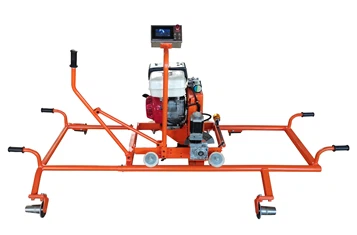

For switch and turnout maintenance, our Switch And Rail Grinding Machine offers precise grinding capabilities. It uses a comprehensive approach that integrates multiple wear detection methods to optimize the grinding process and extend the service life of the grinding wheels.
Conclusion
Detecting grinding wheel wear in rail grinding machines is a multi - faceted task that requires a combination of different methods. Visual inspection, dimensional measurement, power consumption monitoring, sound analysis, and vibration analysis each have their own advantages and limitations. By using integrated systems that combine these methods, we can achieve more accurate and reliable wear detection results.
As a rail grinding machine supplier, we are constantly innovating to improve the wear detection capabilities of our machines. We believe that by providing advanced wear detection technology, we can help our customers improve the efficiency and effectiveness of their rail maintenance operations, reduce costs associated with premature grinding wheel replacement and machine failures, and ultimately ensure the safety and smooth operation of railway tracks.
If you are interested in our rail grinding machines or have any questions about grinding wheel wear detection, please do not hesitate to contact us for procurement discussions.
References
- Bloch, H. P., & Geitner, F. K. (1986). Machinery Failure Analysis and Troubleshooting. Gulf Professional Publishing.
- Stokes, J. L. (2007). The Fundamentals of Railway Track Engineering. BSP Professional Books.
- Trumpler, H. (2002). Abrasive Machining Technology: Basic Principles and Modern Processes of Grinding. Hanser Gardner Publications.
Send Inquiry