



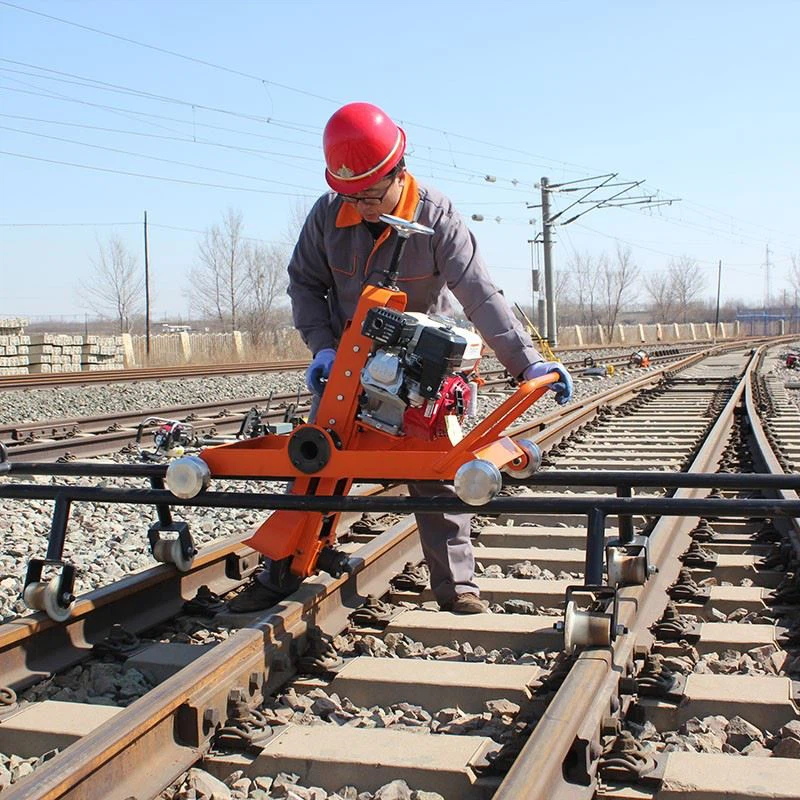


Track Grinding Machine
Product Description


How to make rail grinding machine
Frame: Mount a frame with wheels to run on the track.
Drive system: Incorporate a powerful engine or locomotive to pull the machine along the rails, especially for heavy grinding.
Grinding units: Install multiple grinding units or milling heads for removing metal.
Control systems: Include a system for adjusting the depth of the grind, a handwheel with a graduated scale, and safety features like an emergency stop button.
Power source: Connect the motor to a power source, such as a battery, and ensure all electrical connections are secure.
Benefits of rail grinding machines
Extends rail life: Grinding removes defects like corrugation, cracks and spalling, which helps prevent further damage and significantly extends the service life of the rails.
Improves safety and stability: A smooth, restored rail profile improves the contact between the wheels and the track, which increases train stability and reduces the risk of derailments.
Increases train speed and load capacity: A well-maintained, smooth rail allows for higher speeds and increased axle loads on trains.
Enhances passenger comfort: Smoothing the rail surface reduces vibration and noise, resulting in a more comfortable ride for passengers.
Reduces maintenance costs: By preventing major defects, regular grinding reduces the need for frequent, costly repairs and replacements.
Decreases wear on rolling stock: A smoother rail surface reduces friction and wear on the wheels of the train, extending their life.
Reduces noise emissions: Grinding can significantly decrease the acoustic roughness of the rail, leading to reduced noise emissions from the train's movement.
Key components of after-sales service
Warranty: A standard warranty period, often around 12 months, covers the new machine.
Training and commissioning: Technicians provide on-site training to ensure operators can use the machine safely and correctly. This often includes initial setup and commissioning.
Technical support: Customers can receive technical guidance and remote support via video or other communication methods to troubleshoot issues without an on-site visit.
Spare parts: A continuous supply of necessary spare parts, including grinding stones, is crucial for routine maintenance and repairs.
Maintenance and repair: Services range from scheduled maintenance to full-service contracts and long-term rental options, ensuring the machine's longevity and optimal performance.
On-site services: In-place service is a common offering, with technicians available to perform maintenance and repairs directly at the customer's location.
FAQ
1. why the grinding machine is important?
Rail Grinding is an important maintenance tool, which helps in reducing the damage to the rail, wheel and other track components, increasing their life and safety in operations.
2. How can we reduce the noise of the tram?
Rail grinding reduces noise emissions caused by trams. Wave-shaped irregularities, such as slip corrugations in curved track or corrugations in places where many vehicles accelerate or brake, contribute to noise generation. Regular rail grinding is a decisive measure to reduce noise levels.
3. How Does A grinding Machine Work?
Rail-grinding equipment may be mounted on a single self-propelled vehicle or on a dedicated rail-grinding train which, when used on an extensive network, may include crew quarters. The grinding wheels, of which there may be more than 100, are set at controlled angles to restore the track to its correct profile.
4. Need to wear mask when grinding the track?
A pair of safety goggles and a protection class FFP2 respirator should be worn for adequate protection against these dangers.
5. What are the defects during the grinding?
Burnt and cracked workpieces are two common grinding defects that can produce inaccurate work. Grinding burn is when a workpiece receives thermal damage from an incorrect grinding process that releases excessive heat into the workpiece. This occurrence simulates the tempering process on the material.
Hot Tags: track grinding machine, China track grinding machine manufacturers, suppliers, factory, Electrical Rail Grinding Machine, rail grinding machine, rail profile grinding machine, Railroad Rail Grinder, train grinder, train grinding tracks
You Might Also Like


Send Inquiry