



What is the track grinding machine's adaptability to different track gauges?
Jan 06, 2026
Leave a message
What is the track grinding machine's adaptability to different track gauges?
Hey there! I'm a supplier of track grinding machines, and today I want to dig into the fascinating topic of how these bad - boys adapt to different track gauges.
The Basics of Track Gauges
First off, let's talk a bit about track gauges. A track gauge is simply the distance between the inner sides of the two rails on a railway track. You've got different track gauges used all around the world, and each one has its own unique set of circumstances where it's preferred. For example, the standard gauge, which is 1435 mm (or 4 feet 8 1/2 inches), is the most widely used gauge globally. It's used in places like North America, Western Europe, and large parts of Asia. Then there are broad gauges, which are wider, and narrow gauges, which are, well, narrower.
Why Adaptability Matters
Now, you might be wondering why the adaptability of a track grinding machine to different track gauges is so important. Well, think about it. If you're a railway operator or maintainer, you might have tracks with different gauges in your network. Maybe you've got a standard - gauge mainline, but then there are some narrow - gauge branch lines for specific industrial or tourist purposes. You don't want to buy a different grinding machine for each gauge, right? It's not only expensive but also a pain in the neck to manage multiple machines.
That's where a versatile track grinding machine comes in. With a machine that can adapt to different track gauges, you can use it across your entire railway network. It saves you money, reduces the complexity of maintenance, and allows for more efficient use of resources.
How Do Track Grinding Machines Adapt?
So, how exactly do these machines adapt to different track gauges? Well, there are a few different methods.
Adjustable Wheel Spacing
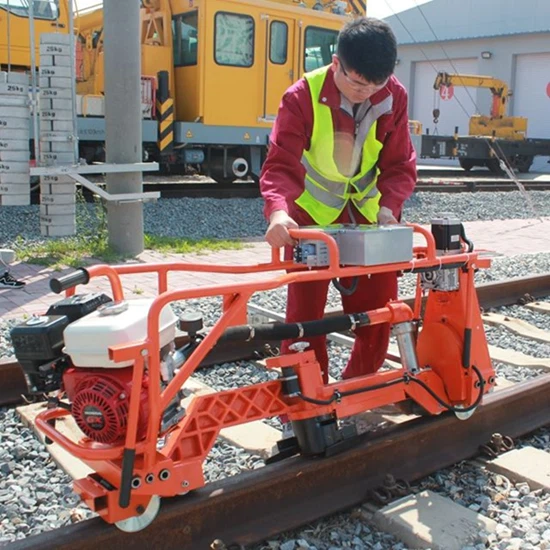
One of the most common ways is by having adjustable wheel spacing. The wheels of the track grinding machine are mounted on axles, and these axles can be adjusted to change the distance between the wheels. This adjustment can be done manually or automatically, depending on the design of the machine. For example, some of our Track Grinding Machine models come with a hydraulic system that can quickly adjust the wheel spacing to match different track gauges.
Replaceable Components
Another approach is to use replaceable components. Some parts of the grinding machine, like the grinding heads or the guide rails, can be replaced to fit different track gauges. This gives you the flexibility to switch between different gauges without having to buy a whole new machine. It's kind of like changing the tires on your car to fit different terrains.
Modular Design
A lot of modern track grinding machines have a modular design. This means that the machine is made up of different modules that can be easily assembled and disassembled. Different modules can be designed to work with different track gauges. When you need to work on a track with a different gauge, you can simply swap out the relevant modules. It's a really efficient way to adapt to different track conditions.
Our Experience as a Supplier
As a supplier of track grinding machines, we've seen firsthand the importance of adaptability. We've worked with customers all over the world who have different track gauge requirements. For instance, we had a customer in South America who had a mix of standard - gauge and narrow - gauge tracks in a mining area. They needed a machine that could handle both types of tracks.
We recommended our Electrical Rail Grinding Machine, which has adjustable wheel spacing and a modular design. This machine was able to adapt quickly to the different track gauges, and the customer was really happy with the results. It not only saved them money but also improved the efficiency of their track maintenance operations.
Challenges in Adaptability
Of course, there are some challenges when it comes to making a track grinding machine adaptable to different track gauges. One of the main challenges is maintaining the accuracy of the grinding process. When you adjust the machine to fit a different gauge, you need to make sure that the grinding heads are still in the right position to effectively grind the rails.
Another challenge is the weight and size of the machine. Adding adjustable components or modular parts can increase the weight and size of the machine, which can make it more difficult to transport and operate. But at our company, we've been working hard to overcome these challenges. We're constantly researching and developing new technologies to make our machines more adaptable while still maintaining their performance and reliability.
The Future of Adaptable Track Grinding Machines
Looking to the future, I think we're going to see even more advanced adaptability in track grinding machines. We're already starting to see the use of smart technologies, like sensors and automation, to make the adjustment process even easier and more accurate. For example, sensors can be used to detect the track gauge automatically, and the machine can adjust itself in real - time.

I also think there will be more focus on making the machines more environmentally friendly. As the demand for sustainable railway operations grows, we'll be looking for ways to reduce the energy consumption and emissions of our track grinding machines.
Contact Us for Your Track Grinding Needs
If you're in the market for a track grinding machine that can adapt to different track gauges, we'd love to hear from you. Whether you're a small - scale railway operator or a large - scale maintenance company, we have the right solution for you. Our Railroad Rail Grinder is just one of the many great products we offer.
Don't hesitate to reach out to us for more information, a quote, or to discuss your specific requirements. We're here to help you keep your railway tracks in top condition.
References
- Railway Engineering Handbook, various editions.
- Journal of Track and Transportation Research, multiple issues related to track maintenance and grinding.
Send Inquiry