



Features of the rail-road dual-purpose vehicle
Sep 08, 2026
Leave a message
Features of the rail-road dual-purpose vehicle
Core features
1. Dual-mode movement, quick switching
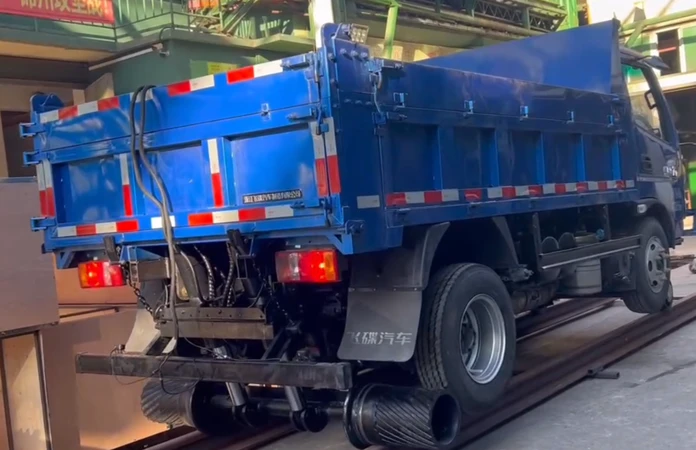
Equipped with hydraulic adjustable steel rail guiding wheels: Lower the guiding wheels and the rubber main wheels will press on the steel rail, operating in the track mode; Raise the guiding wheels and it will be like normal road driving. The transition between entering and exiting the track is fast, and there is no need to rely on locomotives for yard operations.
The rubber wheel drive is the mainstream, with a large friction coefficient between rubber and steel rail, high low-speed traction force, and a small body can pull very heavy trains (hundreds to thousands of tons). It is commonly used in locomotive depots and factory yard shunting.
2. Flexible and adaptable mobility
• No need for dedicated turnouts or transfer platforms, can directly enter the track from the level crossing;
• Can pass through small-radius curves;
• Can run on factory roads and also perform track operations on blocked lines, with advantages in emergency rescue and repair scenarios.
3. Good economy and simple maintenance
Compared with traditional diesel shunting locomotives: lower procurement cost, less fuel consumption; strong component universality, can be maintained under ordinary auto repair conditions, high utilization rate.
4. Control and safety configuration
• Most support dual modes of driver's cab operation + wireless remote control, safer for remote operations in the depot and narrow areas;
• Front and rear are equipped with coupler coupling devices, capable of pushing, towing locomotives, EMUs, and railway freight cars;
• Equipped with track limiters, sound and light alarms, and multiple braking protection systems.
5. Power types
Divided into diesel model and pure electric model: Electric noise is low, no exhaust gas, suitable for indoor maintenance depots; Diesel is suitable for outdoor and long-distance emergency rescue operations.
Main purpose
• Traction shunting: At locomotive depots, locomotive depots, steel mills, power plants, and port dedicated lines, push the locomotives, EMUs, and freight cars into position;
• Engineering maintenance: Contact wire maintenance, track emergency repair, lifting, snow removal;
• Emergency rescue: After the line is disrupted by a disaster, quickly arrive at the scene to carry out operations.
Key performance points
• Track mode: It belongs to the operation vehicles, with a low running speed (generally 5-20 km/h), heavy traction, and not pursuing high speed;
• Applicable standard gauge: 1435mm, or other gauges can be customized;
• Only allowed to operate on blocked lines on the track, and cannot run with operating trains together.
Simple distinction of three driving types
1. Rubber wheel drive (C type, the most common in the market): Rubber tires rub against the rail surface to provide traction, and the guiding wheels only serve as guidance; most shunting traction vehicles are of this type;
2. Friction wheel drive (B type): Road tires rub to drive the steel wheels to rotate;
3. Steel wheel drive (A type): Steel wheels directly drive, similar to the principle of traditional rail locomotives.
Send Inquiry