



What materials are used to build a pod house?
Jul 29, 2025
Leave a message
What materials are used to build a pod house?
As a supplier of Pod House Apple Cabin, I've witnessed firsthand the growing fascination with these compact yet versatile living spaces. Pod houses offer a unique blend of functionality, mobility, and sustainability, making them an attractive option for those seeking alternative housing solutions. One of the key aspects that contribute to the success of a pod house is the choice of materials used in its construction. In this blog post, I'll delve into the various materials commonly employed in building a Pod House Apple Cabin and explain why each one is essential.
Structural Materials
The structural integrity of a pod house is paramount, as it needs to withstand various environmental conditions and support the weight of its contents. For the Pod House Apple Cabin, we primarily use high - strength steel and engineered wood products.
High - strength steel is an excellent choice for the frame of the pod house. It offers exceptional strength - to - weight ratio, which means that the frame can be both strong and relatively lightweight. This is crucial for a movable structure like the Pod House Apple Cabin, as it needs to be easily transported. Steel is also highly durable and resistant to corrosion, especially when properly coated. This ensures that the frame can last for decades, even in harsh outdoor environments.
Engineered wood products, such as laminated veneer lumber (LVL) and oriented strand board (OSB), are used for the interior framing and some load - bearing elements. LVL is made by bonding multiple layers of thin wood veneers together with adhesives. It has consistent strength properties and is less likely to warp or twist compared to solid wood. OSB, on the other hand, is made from strands of wood that are compressed and glued together. It provides a strong and stable surface for walls, floors, and roofs. These engineered wood products are not only cost - effective but also environmentally friendly, as they are often made from fast - growing and sustainably sourced trees.
Exterior Cladding
The exterior cladding of a pod house not only protects the structure from the elements but also contributes to its aesthetic appeal. For the Pod House Apple Cabin, we offer several options for exterior cladding.
One popular choice is cedar siding. Cedar is a natural wood that has a beautiful grain pattern and a warm, rustic look. It is also naturally resistant to rot, decay, and insect damage. Cedar siding can be stained or painted to match the desired color scheme of the pod house. Another advantage of cedar is its ability to breathe, which helps to prevent moisture buildup inside the walls.
Fiber cement siding is another option we provide. It is made from a mixture of cement, sand, and cellulose fibers. Fiber cement siding is extremely durable and can mimic the look of wood, stone, or brick. It is resistant to fire, pests, and moisture, making it a low - maintenance choice for the exterior of the pod house. Additionally, fiber cement siding comes in a variety of styles and colors, allowing for a customized appearance.
Roofing Materials
The roof of a pod house plays a crucial role in protecting the interior from rain, snow, and sunlight. For the Pod House Apple Cabin, we typically use metal roofing or asphalt shingles.
Metal roofing is a popular choice due to its longevity and energy - efficiency. It can last up to 50 years or more, depending on the type of metal and the quality of the coating. Metal roofs are also highly reflective, which means they can reduce the amount of heat absorbed by the pod house, leading to lower energy costs. They are available in a variety of colors and styles, from traditional standing seam to more modern corrugated designs.
Asphalt shingles are a more affordable option for roofing. They are easy to install and come in a wide range of colors and textures. Asphalt shingles are made from a fiberglass or organic mat base that is coated with asphalt and mineral granules. While they may not last as long as metal roofing, they still provide reliable protection for the pod house for 20 - 30 years.
Interior Finishes
The interior finishes of a pod house can greatly enhance the comfort and functionality of the living space. For the Pod House Apple Cabin, we use a combination of materials to create a cozy and inviting interior.
Drywall is commonly used for the walls and ceilings. It provides a smooth and even surface that can be painted or wallpapered. Drywall is also relatively inexpensive and easy to install. Underlayment materials, such as cork or rubber, are often used beneath the flooring to provide sound insulation and cushioning.
For the flooring, we offer options such as laminate, vinyl, and hardwood. Laminate flooring is a cost - effective choice that can mimic the look of hardwood or stone. It is durable and easy to clean. Vinyl flooring is another popular option, especially for areas prone to moisture, such as bathrooms and kitchens. It is waterproof, flexible, and available in a variety of patterns and colors. Hardwood flooring adds a touch of elegance and warmth to the interior. It is made from solid wood and can be sanded and refinished multiple times, extending its lifespan.
Windows and Doors
Windows and doors are essential components of a pod house, as they provide natural light, ventilation, and access to the outside. For the Pod House Apple Cabin, we use high - quality, energy - efficient windows and doors.
Double - or triple - glazed windows are commonly installed. These windows have multiple layers of glass separated by air or gas - filled spaces, which provide excellent insulation. They can reduce heat transfer and noise infiltration, making the interior of the pod house more comfortable. The frames of the windows are typically made from vinyl, aluminum, or wood. Vinyl frames are energy - efficient, low - maintenance, and affordable. Aluminum frames are strong and durable, while wood frames offer a traditional and warm look.

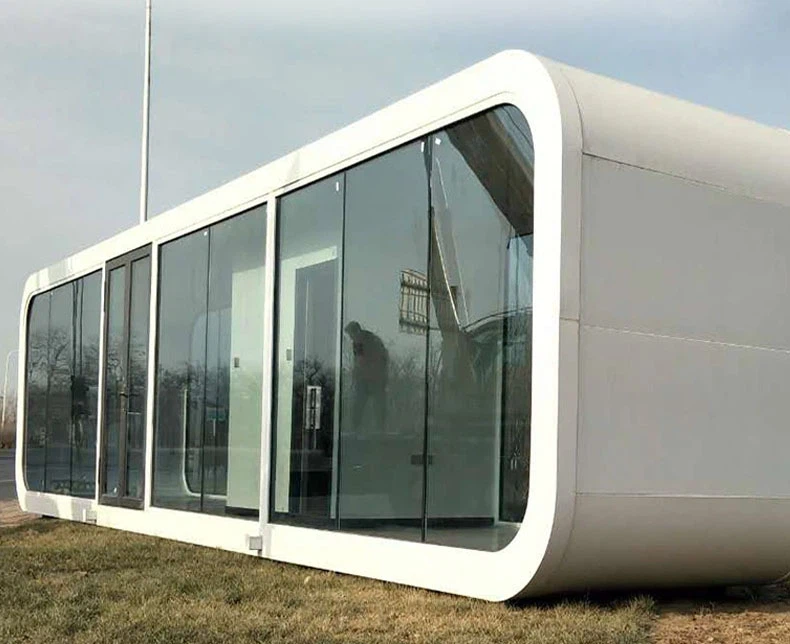
The doors are designed to be secure and energy - efficient. They are often made from solid wood or fiberglass, with weatherstripping to prevent air and water leakage. Some doors also come with built - in locks and security features to ensure the safety of the occupants.
Insulation Materials
Proper insulation is crucial for a pod house to maintain a comfortable indoor temperature and reduce energy consumption. We use a variety of insulation materials in the Pod House Apple Cabin.
Fiberglass insulation is one of the most commonly used materials. It is made from fine glass fibers that trap air, providing excellent thermal insulation. Fiberglass insulation is relatively inexpensive and easy to install. It is available in batts or loose - fill form.
Spray foam insulation is another option. It is applied as a liquid that expands and hardens into a solid foam. Spray foam insulation provides a seamless barrier against air and moisture, and it can conform to irregular shapes and spaces. It has a high R - value (a measure of thermal resistance), which means it can effectively reduce heat transfer.
In conclusion, building a Pod House Apple Cabin requires a careful selection of materials to ensure its structural integrity, durability, energy - efficiency, and aesthetic appeal. Each material plays a specific role in creating a comfortable and functional living space. Whether you are looking for a permanent residence, a vacation home, or a rental property, the Pod House Apple Cabin offers a unique and sustainable housing solution.
If you are interested in our Pod House Apple Cabin, 40ft Cabin Tiny House, or Apple Cabin Movable House, we invite you to contact us for more information and to discuss your specific requirements. We look forward to the opportunity to work with you and help you bring your dream pod house to life.
References
- Building Construction Handbook, McGraw - Hill
- The Green Building Bible, David Eisenberg
- Modern Sustainable Building Materials, Elsevier
Send Inquiry