



What are the environmental impacts of a 40ft cabin tiny house?
Aug 27, 2025
Leave a message
Hey there! I'm a supplier of 40ft cabin tiny houses, and today I wanna chat about the environmental impacts of these cool little homes.
Let's start with the construction phase. Building a 40ft cabin tiny house can have both positive and negative environmental effects. On the positive side, compared to traditional large - scale houses, tiny houses generally use fewer materials. We're not talking about building a multi - story mansion here. For instance, the amount of lumber needed for a 40ft cabin is significantly less than that for a big family home. This means less deforestation in the long run. A lot of the time, we can source our wood from sustainably managed forests. These forests are carefully maintained so that trees are replanted as they're harvested, ensuring a continuous supply of wood without causing major damage to the ecosystem.
When it comes to other construction materials like concrete and steel, the quantities used in a 40ft cabin are also relatively small. Less concrete means less carbon dioxide emissions during its production. Concrete production is a major contributor to greenhouse gas emissions because of the energy - intensive process of making cement, which is a key ingredient. And with less steel, we're reducing the demand on mining operations, which can be quite destructive to the environment, causing soil erosion and habitat loss.
However, there are some negative aspects during construction too. The transportation of materials to the construction site can add to the carbon footprint. If the materials are sourced from far - away places, the trucks or ships used to transport them burn fossil fuels, releasing pollutants into the air. But as a supplier, we try our best to source materials locally as much as possible. This not only cuts down on transportation emissions but also supports the local economy.
Now, let's move on to the energy consumption of a 40ft cabin tiny house. These houses are usually much more energy - efficient than larger homes. Since they have a smaller floor area, they require less energy for heating and cooling. For example, a small heater can easily warm up a 40ft cabin during the cold months, while a big house might need a large central heating system.
Many of our customers choose to install solar panels on their 40ft cabins. Solar energy is a clean and renewable source of power. Once the solar panels are installed, they can generate electricity for the house without producing any greenhouse gas emissions. This helps to reduce the reliance on non - renewable energy sources like coal and natural gas, which are major contributors to climate change.

Water usage is another important aspect. A 40ft cabin can be designed with water - saving fixtures. Low - flow toilets and faucets can significantly reduce the amount of water used in the house. Some customers even set up rainwater harvesting systems. These systems collect rainwater from the roof and store it for non - potable uses like watering plants or flushing toilets. This reduces the demand on municipal water supplies, which often require a lot of energy to treat and distribute water.
But there are also some potential environmental issues related to waste management in a 40ft cabin. Since these houses are often off - grid or in remote areas, proper waste disposal can be a challenge. If not managed correctly, solid waste can end up in landfills, where it decomposes and releases methane, a potent greenhouse gas. And if wastewater is not treated properly, it can contaminate local water sources, harming aquatic life and potentially making the water unsafe for humans. As a supplier, we can provide guidance on setting up proper waste and wastewater management systems, such as composting toilets and small - scale wastewater treatment plants.
Let's talk about the long - term environmental impact. A 40ft cabin tiny house has a relatively long lifespan. If it's well - built and maintained, it can last for decades. This means that instead of constantly building new houses, which consumes a lot of resources, people can live in these tiny houses for a long time. It also reduces the demand for new land development. In many areas, large - scale housing developments lead to the destruction of natural habitats, such as forests and wetlands. By choosing a 40ft cabin, people can minimize their impact on the environment in this regard.
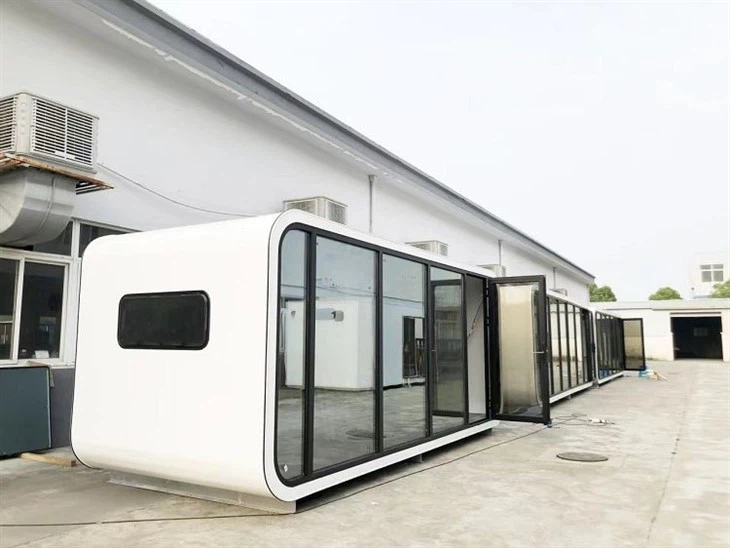
Now, I wanna mention some of the specific 40ft cabin models we offer. We have the Apple Cabin Movable House. This model is designed to be easily movable, which is great if you want to change your living location from time to time. It's also built with energy - efficient materials and can be customized with solar panels and water - saving fixtures.
The Prefab Apple Cabin Hotel is another interesting option. It's perfect for those who want to start a small - scale hospitality business in an eco - friendly way. The prefab design means it can be quickly assembled on - site, reducing construction time and waste.
And then there's the Pod House Apple Cabin. This unique design offers a cozy and modern living space. It's compact but still has all the necessary amenities, making it an energy - efficient choice for individuals or small families.
In conclusion, a 40ft cabin tiny house has many environmental benefits, including reduced material usage, lower energy consumption, and less water usage. However, there are also some challenges that need to be addressed, such as waste management and transportation of materials. As a supplier, we're committed to helping our customers build and live in these houses in the most environmentally friendly way possible.
If you're interested in learning more about our 40ft cabin tiny houses or want to discuss a potential purchase, feel free to reach out. We're here to answer all your questions and guide you through the process.
References
- "Environmental Impact of Construction Materials" - Construction Research Journal
- "Energy - Efficient Design for Small Homes" - Sustainable Living Magazine
- "Water Conservation in Residential Buildings" - Water Resources Journal
Send Inquiry