



How do you secure a mobile house with wheel during transportation?
Jul 08, 2025
Leave a message
Hey there! As a supplier of mobile houses with wheels, I've seen firsthand the importance of securing these homes during transportation. It's not just about getting the house from point A to point B; it's about ensuring that it arrives in one piece and ready to be set up for a new adventure. In this blog, I'll share some practical tips on how to secure a mobile house with wheels during transportation.
Pre - Transportation Checks
Before you even think about hitting the road, you need to do a thorough inspection of the mobile house and the towing vehicle. First, check the tires of both the mobile house and the towing vehicle. Make sure the tire pressure is at the recommended level. Under - inflated tires can lead to poor handling and increased wear and tear, while over - inflated tires can burst during the journey.
Inspect the brakes of the towing vehicle and the mobile house. The brakes are crucial for your safety on the road. Check the brake fluid levels, and look for any signs of leaks or damage. If you notice any issues, get them fixed immediately.
Another important pre - transportation check is to examine the hitch that connects the mobile house to the towing vehicle. Ensure that it is properly attached and locked. A loose hitch can cause the mobile house to detach during transportation, which is extremely dangerous. You can find more details about proper hitch installation on Mobile House with Wheel.
Interior Securing
Once you've taken care of the external checks, it's time to focus on the interior of the mobile house. Remove any loose items that could move around during transportation. Items like furniture, appliances, and personal belongings should be either stored in cabinets or secured with straps.
For larger furniture pieces, use heavy - duty straps to tie them down to the floor or walls of the mobile house. This will prevent them from shifting and potentially causing damage to the interior of the house or even breaking loose and causing an accident.
Appliances such as refrigerators, stoves, and microwaves should also be secured. Most appliances come with built - in tie - down points or brackets. Use these to fasten the appliances in place. If there are no built - in tie - down points, you can use straps or bungee cords to secure them.
Exterior Securing
On the exterior, start by closing and locking all windows and doors. This not only keeps the interior safe from the elements but also prevents them from flying open during transportation, which could cause damage to the house or pose a hazard to other road users.
If your mobile house has awnings, fold them up and secure them tightly. Awnings are vulnerable to wind damage during transportation, and an unsecured awning can catch the wind and cause the mobile house to become unstable.
Check any external storage compartments. Make sure they are closed and locked. Loose items in these compartments can rattle around and cause damage to the compartment or the exterior of the house.
Weight Distribution
Proper weight distribution is key to a safe and smooth transportation of a mobile house with wheels. An unevenly loaded mobile house can cause handling problems, increased wear on the tires, and even affect the braking performance of the towing vehicle.
Place heavier items towards the center of the mobile house and closer to the axles. This helps to keep the center of gravity low and stable. Avoid placing too much weight at the front or rear of the house, as this can lead to swaying or fishtailing during transportation.
You can also use weight - distribution hitches. These hitches help to distribute the weight of the mobile house more evenly across the axles of the towing vehicle and the mobile house itself. They can significantly improve the handling and stability of the towing setup.
Route Planning
When planning your route, consider the road conditions, traffic, and any potential obstacles. Avoid roads with sharp turns, steep inclines, or rough surfaces if possible. These conditions can put extra stress on the mobile house and the towing vehicle.
Check the weather forecast before you start your journey. High winds, heavy rain, or snow can make transportation more difficult and dangerous. If bad weather is predicted, it might be a good idea to postpone your trip until conditions improve.
During Transportation
While on the road, drive at a reasonable speed. Don't exceed the recommended speed limit for towing a mobile house. High speeds can increase the risk of swaying, tire blowouts, and other problems.
Keep a safe distance from other vehicles. You need more time and distance to stop a towing setup compared to a regular vehicle. A good rule of thumb is to keep at least a 4 - second following distance.
Periodically check your mirrors to make sure the mobile house is still in good condition. Look for any signs of swaying, tire problems, or other issues. If you notice anything abnormal, pull over safely and check it out.
Post - Transportation Checks
Once you've reached your destination, do another set of checks. Inspect the mobile house for any signs of damage that may have occurred during transportation. Check the exterior for dents, scratches, or loose parts.
Inside the house, make sure all the secured items are still in place. If any straps or ties have come loose, re - secure them.
Open all windows and doors to air out the house. This helps to remove any stale air that may have accumulated during transportation.
In conclusion, securing a mobile house with wheels during transportation is a multi - step process that requires careful planning and attention to detail. By following these tips, you can ensure that your mobile house arrives safely at its destination.
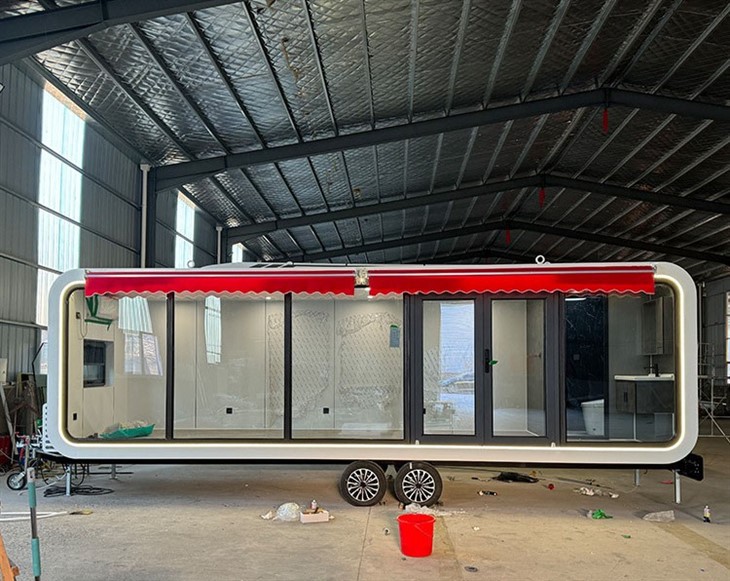

If you're in the market for a high - quality mobile house with wheels, check out our Apple House On Wheel and House On Wheel Apple Cabin. We offer a wide range of options to suit your needs and preferences.
If you're interested in purchasing one of our mobile houses or have any questions about transportation and securing, feel free to reach out. We're here to help you make the best choice for your mobile living needs.
References
- General knowledge from years of experience in the mobile house with wheels industry.
- Manufacturer's manuals for mobile houses and towing vehicles.
Send Inquiry