



Do pod houses have a good acoustic environment?
Jun 09, 2025
Leave a message
Do pod houses have a good acoustic environment? As a supplier of the Pod House Apple Cabin, I've delved deep into this question, and I'm excited to share my insights with you.
Understanding the Basics of Acoustic Environment
Before we dive into the specific acoustic performance of pod houses, it's essential to understand what constitutes a good acoustic environment. An ideal acoustic environment minimizes external noise intrusion while ensuring clear internal sound propagation. This balance is crucial for comfort, whether you're using the pod house for relaxation, work, or entertainment.
External noise can come from various sources, such as traffic, construction, or wildlife. To achieve a quiet interior, a pod house must effectively block or absorb these unwanted sounds. On the other hand, internal sound clarity is important for conversations, listening to music, or watching movies. A well - designed acoustic environment should prevent excessive reverberation, which can make speech and other sounds muddy and difficult to understand.
The Design Features of Pod House Apple Cabin for Acoustics
The Pod House Apple Cabin is designed with several features that contribute to its acoustic performance.
Insulation Materials
One of the key elements in creating a good acoustic environment is the use of high - quality insulation materials. The Apple Cabin uses advanced insulation that not only helps with temperature regulation but also acts as a sound barrier. For example, the walls are filled with a special type of fiberglass insulation that has excellent sound - absorbing properties. Fiberglass insulation works by trapping air within its fibers. When sound waves hit the insulation, the energy of the waves is converted into heat as the air molecules within the fibers vibrate. This reduces the amount of sound that can pass through the walls, effectively isolating the interior from external noise.
Structural Design
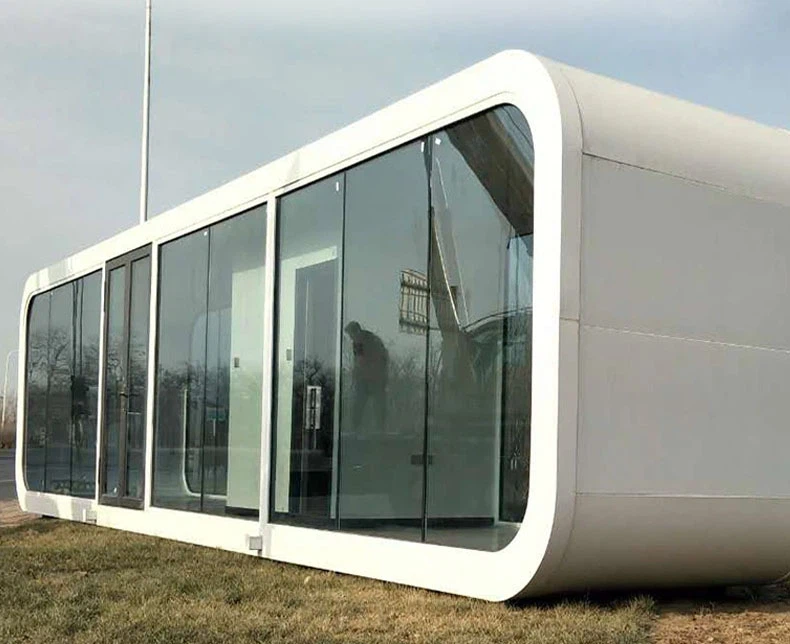
The structural design of the The Apple Cabin also plays a significant role in its acoustic performance. The pod - like shape of the cabin helps to distribute sound evenly within the space. Unlike rectangular rooms, which can create standing waves and areas of poor sound quality, the curved walls of the Apple Cabin reflect sound in a more diffuse manner. This reduces the likelihood of echoes and ensures that sound is spread uniformly throughout the interior.
In addition, the cabin's construction is designed to minimize gaps and seams. Any small openings in the structure can allow sound to leak in or out. The Apple Cabin is built with precision, using air - tight seals around doors and windows. This further enhances its ability to block external noise and maintain a quiet interior.
Interior Finishes
The interior finishes of the Pod House Apple Cabin are carefully selected to contribute to its acoustic environment. Soft materials, such as carpets and wall coverings, are used to absorb sound. Carpets, for instance, can reduce the reflection of sound waves from the floor, which is especially important in areas where people walk or move around. Wall coverings with a textured surface can also help to break up sound waves and prevent them from bouncing back into the room.
Testing the Acoustic Performance
To ensure that the Pod House Apple Cabin meets high acoustic standards, we conduct a series of tests.
Sound Transmission Class (STC) Testing
One of the most common tests for evaluating a building's sound - blocking ability is the Sound Transmission Class (STC) test. This test measures how well a partition, such as a wall or a window, can reduce the transmission of sound. The Apple Cabin has been tested, and it has achieved an impressive STC rating. This means that it can effectively block a significant amount of external noise, providing a quiet and peaceful interior environment.

Reverberation Time Testing
Reverberation time is another important factor in assessing an acoustic environment. It measures the time it takes for sound to decay by 60 decibels after the source of the sound has stopped. A short reverberation time is desirable for clear speech and good sound quality. In the Pod House Apple Cabin, we have designed the interior space to have an optimal reverberation time. Through careful selection of materials and the design of the cabin's shape, we have been able to achieve a reverberation time that is within the recommended range for a comfortable living or working space.
Real - World Applications and User Experiences
The acoustic performance of the Pod House Apple Cabin has been well - received in various real - world applications.
Residential Use
For those looking for a peaceful retreat, the Apple Cabin provides an ideal living space. Homeowners have reported that they can enjoy a quiet night's sleep without being disturbed by outside noise. Whether it's located in a busy urban area or a rural setting with wildlife sounds, the cabin effectively shields the interior from unwanted noise.
Office Use
In an office setting, the good acoustic environment of the Prefab Apple Cabin Hotel is highly beneficial. It allows for clear communication during meetings and focused work. Employees can work without being distracted by external noise or the conversations of colleagues in nearby areas.
Limitations and Considerations
While the Pod House Apple Cabin offers a good acoustic environment, there are some limitations and considerations.
Location
The location of the cabin can have an impact on its acoustic performance. If it is placed in an area with extremely high levels of noise, such as next to a busy highway or an airport, even the best - designed acoustic features may not be able to completely eliminate all noise. In such cases, additional sound - proofing measures may be required.
Interior Activities
The type of activities taking place inside the cabin can also affect the perceived acoustic quality. For example, if you are using the cabin for a loud party or a high - energy event, the internal sound levels may become an issue. However, for normal day - to - day activities, the cabin's acoustic design is more than sufficient.
Conclusion
In conclusion, the Pod House Apple Cabin offers a good acoustic environment. Through its use of high - quality insulation materials, well - thought - out structural design, and carefully selected interior finishes, it effectively blocks external noise and provides clear internal sound propagation. Whether for residential or office use, the cabin's acoustic performance has been proven through testing and real - world applications.
If you are interested in learning more about the Pod House Apple Cabin or are considering a purchase, we encourage you to contact us for a detailed discussion. We are here to answer all your questions and help you make an informed decision.
References
- "Building Acoustics" by Cyril M. Harris.
- Research papers on acoustic insulation materials published in the Journal of the Acoustical Society of America.
Send Inquiry