



Are apple cabin tiny houses wind - resistant?
Aug 18, 2025
Leave a message
As a supplier of Apple Cabin tiny houses, I often get asked about the wind resistance of these unique dwellings. It's a crucial question, especially for those considering placing their tiny house in areas prone to high winds, such as coastal regions or open plains. In this blog post, I'll delve into the factors that contribute to the wind resistance of Apple Cabin tiny houses and provide insights based on scientific principles and real - world experiences.

Structural Design and Engineering
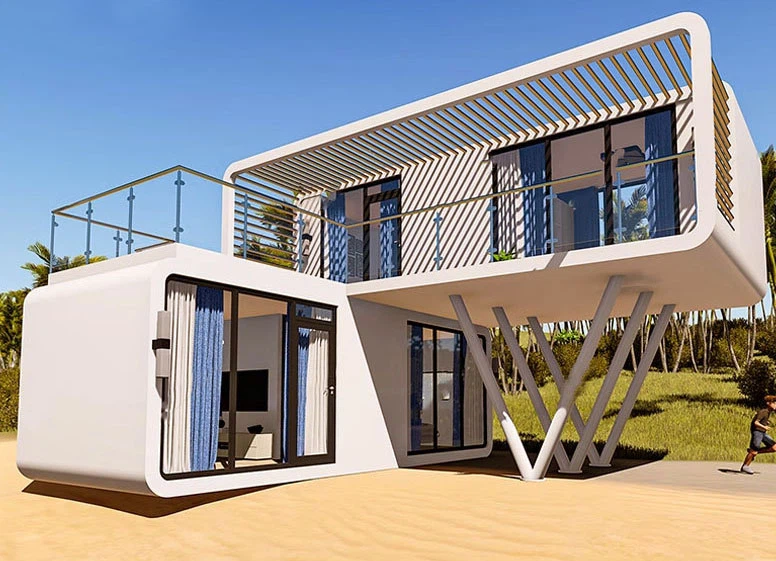
The first aspect to consider when evaluating the wind resistance of Apple Cabin tiny houses is their structural design. Our 20ft Apple Cabin Tiny House 20ft Apple Cabin Tiny House is meticulously engineered to withstand various weather conditions, including strong winds. The shape of the cabin plays a significant role in its wind - resistance capabilities. The aerodynamic design helps to reduce wind drag, allowing the wind to flow smoothly around the structure rather than creating high - pressure areas that could cause damage.
The frame of the Apple Cabin is constructed using high - quality materials. We use sturdy wood and metal components that are designed to distribute the forces exerted by the wind evenly across the structure. This means that no single part of the house bears an excessive amount of stress during windy conditions. For example, the trusses in the roof are engineered to transfer the wind load down to the foundation or the wheels if it's a mobile unit.
Foundation and Anchoring
Proper foundation and anchoring are essential for ensuring the wind resistance of any building, and Apple Cabin tiny houses are no exception. When it comes to stationary units, a well - built foundation provides a stable base for the house. We recommend using a concrete slab or a pier foundation, depending on the location and soil conditions. These foundations help to keep the house firmly in place during high winds.
For our mobile Tiny House Mobile Home, secure anchoring systems are crucial. We provide heavy - duty tie - down straps and ground anchors that can be used to fasten the tiny house to the ground. These anchoring systems are designed to resist the uplift forces generated by strong winds. By firmly attaching the house to the ground, we can prevent it from being blown over or moved during windy weather.
Testing and Certification
At our company, we take the wind resistance of our Apple Cabin tiny houses seriously. We conduct rigorous testing to ensure that our products meet or exceed industry standards. Our testing includes computer - simulated wind tunnel tests, where we analyze how the house behaves under different wind speeds and directions. These tests allow us to make any necessary adjustments to the design and construction of the houses.
In addition to our in - house testing, we also seek third - party certifications. These certifications provide independent verification of the wind resistance capabilities of our Apple Cabin tiny houses. Having these certifications gives our customers peace of mind, knowing that their houses have been thoroughly tested and are safe to use in windy conditions.
Real - World Examples
Over the years, we have received numerous testimonials from customers who have experienced high winds with their Apple Cabin tiny houses. For instance, one customer in a coastal area reported that their Apple Cabin Office withstood a severe storm with wind speeds of up to 70 miles per hour. The house remained intact, and there was no significant damage to the structure. This real - world example demonstrates the effectiveness of our design and construction methods in protecting the houses from strong winds.
Factors Affecting Wind Resistance
While our Apple Cabin tiny houses are designed to be wind - resistant, there are some external factors that can affect their performance. The location of the house is a critical factor. If the house is placed in a valley or a location with a lot of wind turbulence, it may experience higher wind loads than in an open, flat area. Vegetation around the house can also play a role. Trees and shrubs can act as windbreaks, reducing the wind speed and force hitting the house. However, if the vegetation is not properly maintained and a large tree falls on the house during a storm, it can cause damage.
The orientation of the house also matters. If the house is facing directly into the prevailing wind direction, it may experience higher wind pressures. We recommend orienting the house in a way that minimizes the impact of the wind. This can often be achieved by consulting with a local architect or a building professional who is familiar with the wind patterns in the area.
Conclusion
In conclusion, Apple Cabin tiny houses are designed and built to be highly wind - resistant. Through careful structural design, proper foundation and anchoring, rigorous testing, and real - world validation, we ensure that our houses can withstand strong winds. However, it's important to consider the external factors that can affect the wind resistance of the house and take appropriate measures to mitigate their impact.
If you're interested in purchasing an Apple Cabin tiny house and want to learn more about its wind - resistance features or have any other questions, we encourage you to contact us for a procurement discussion. We have a team of experts who can provide you with detailed information and help you choose the right option for your needs.
References
- Building Codes and Standards for Wind Resistance in Residential Buildings. National Building Code Institute.
- Wind Engineering for Low - Rise Buildings. ASCE 7 - 16 Standard.
- Case Studies on the Performance of Tiny Houses in High - Wind Areas. Journal of Sustainable Building Design.
Send Inquiry